
WHY PRINT MEDIA IS THRIVING IN A DIGITAL WORLD

Fast forward to today, and we can all agree that print has firmly validated its place from both a consumer and advertiser perspective. In fact, print marketing is still going strong. Yes, we may have seen a decline in newspaper circulations and print advertising spend over the last 10 years, as advertisers now stretch budgets to include the less traditional marketing channels, not to mention a global pandemic that really shook things up at the start of the decade and the current financial crisis, impacting consumer habits and spends. But print media, working harmoniously with its digital counterparts, is still a hugely successful and effective route to market for brands and with so much of what we do in everyday life being on a screen these days, it’s refreshing to be able to encourage consumers to continue engaging with physical print media.
There’s no denying that the digital advertising landscape has also had its share of challenges over recent years, with the introduction of GDPR laws, ad blockers and Google phasing out the third party cookie. All of these online challenges can only strengthen the case for incorporating print marketing channels, as we see advertisers instead rely on first party data and contextual based targeting… tactics that print advertisers mastered many years ago! Some of the UK’s largest advertisers have even switched back to choosing the more traditional, attributable media channels where they can continue to reach their target audiences more easily and efficiently.
Last year I made the move back to the print side to join The Leaflet Company. The Leaflet Company does exactly what it says on the tin plus so much more. Launching 36 years ago the original USP was to deliver leaflets alongside free newspapers. According to a recent interview with our CEO Mark Young, at one point in the 90’s most households were getting at least 2 free newspapers a week. In many cases, these were newspapers that Mediaforce represented and therefore had relationships with already, so it really was the perfect opportunity to allow advertisers another intrusive route to the consumer, whilst they were in their home. It’s developed remarkably over the years and now over 90% of our Door Drops are distributed by Royal Mail or specialist local delivery teams rather than alongside free newspapers. With an expert team of planners and data specialists we are able to use geo-demographic data sets to profile an advertiser’s customer data to fully understand their target audience and then select the postal sectors that are most suitable for distribution. Often using online data to meticulously plan offline campaigns.
Studies show that consumers who receive print mail promoting online sites spend 13% more on products than those who just receive digital promotions. QR codes are a great example of a tool used today to bridge the gap between offline and online. Whilst QR codes have been in existence since the mid 90’s, albeit in a far less user friendly manner, it wasn’t until the Covid-19 Pandemic that these really took off and nowadays you’d find it hard to go a whole day without coming across one. They’re a powerful way to drive an offline audience to an online environment, with the added benefit of being measurable meaning engagement rates of offline media can be tracked in ways that have historically not been possible.
We are undeniably living in a digital world, but brands are still typically benefitting most from cross-channel campaigns incorporating both online and offline media. We’re increasingly seeing these overlaps between the two which continue to keep print media up-to-date and relevant. Print has the added benefit of being tactile and when so much of what we do in our daily lives is digital, offline media stands out further against its online counterpart. With research showing that people are 70% more likely to remember brands seen in print compared to online, we can safely say that print still serves as an extremely beneficial marketing tool for brands, proving that print is absolutely not dead.
But print media, working harmoniously with its digital counterparts, is still a hugely successful and effective route to market
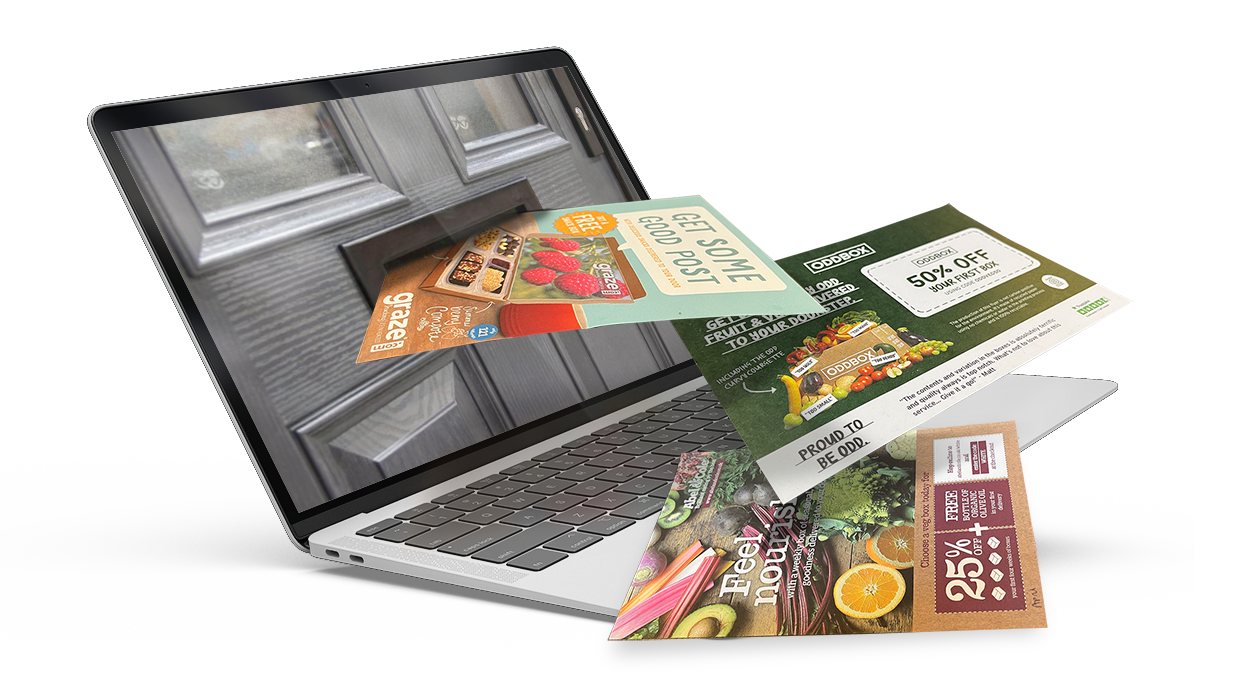
Fast forward to today, and we can all agree that print has firmly validated its place from both a consumer and advertiser perspective. In fact, print marketing is still going strong. Yes, we may have seen a decline in newspaper circulations and print advertising spend over the last 10 years, as advertisers now stretch budgets to include the less traditional marketing channels, not to mention a global pandemic that really shook things up at the start of the decade and the current financial crisis, impacting consumer habits and spends. But print media, working harmoniously with its digital counterparts, is still a hugely successful and effective route to market for brands and with so much of what we do in everyday life being on a screen these days, it’s refreshing to be able to encourage consumers to continue engaging with physical print media.
There’s no denying that the digital advertising landscape has also had its share of challenges over recent years, with the introduction of GDPR laws, ad blockers and Google phasing out the third party cookie. All of these online challenges can only strengthen the case for incorporating print marketing channels, as we see advertisers instead rely on first party data and contextual based targeting… tactics that print advertisers mastered many years ago! Some of the UK’s largest advertisers have even switched back to choosing the more traditional, attributable media channels where they can continue to reach their target audiences more easily and efficiently.
Last year I made the move back to the print side to join The Leaflet Company. The Leaflet Company does exactly what it says on the tin plus so much more. Launching 36 years ago the original USP was to deliver leaflets alongside free newspapers. According to a recent interview with our CEO Mark Young, at one point in the 90’s most households were getting at least 2 free newspapers a week. In many cases, these were newspapers that Mediaforce represented and therefore had relationships with already, so it really was the perfect opportunity to allow advertisers another intrusive route to the consumer, whilst they were in their home. It’s developed remarkably over the years and now over 90% of our Door Drops are distributed by Royal Mail or specialist local delivery teams rather than alongside free newspapers. With an expert team of planners and data specialists we are able to use geo-demographic data sets to profile an advertiser’s customer data to fully understand their target audience and then select the postal sectors that are most suitable for distribution. Often using online data to meticulously plan offline campaigns.
Studies show that consumers who receive print mail promoting online sites spend 13% more on products than those who just receive digital promotions. QR codes are a great example of a tool used today to bridge the gap between offline and online. Whilst QR codes have been in existence since the mid 90’s, albeit in a far less user friendly manner, it wasn’t until the Covid-19 Pandemic that these really took off and nowadays you’d find it hard to go a whole day without coming across one. They’re a powerful way to drive an offline audience to an online environment, with the added benefit of being measurable meaning engagement rates of offline media can be tracked in ways that have historically not been possible.
We are undeniably living in a digital world, but brands are still typically benefitting most from cross-channel campaigns incorporating both online and offline media. We’re increasingly seeing these overlaps between the two which continue to keep print media up-to-date and relevant. Print has the added benefit of being tactile and when so much of what we do in our daily lives is digital, offline media stands out further against its online counterpart. With research showing that people are 70% more likely to remember brands seen in print compared to online, we can safely say that print still serves as an extremely beneficial marketing tool for brands, proving that print is absolutely not dead.
If you would like to know more, please contact us today
T: 020 7583 2010